What Are the Most Fire-Prone Buildings in the UK?
B
Brendan TuiteAugust 10, 2022
7 min read

In order to keep their employees and the public safe, businesses must develop and follow health and safety policies. Between 2020 - 2021 the UK fire department was called out to 11,916 primary fire incidents at non residential premises.
Developing a fire safety policy is important for all types of businesses to prevent an outbreak of fire and reduce the effects in case of an incident.
Our health and safety consultants have reviewed the buildings with the highest incidents that were attended by the fire service across the UK.
This blog also explores the amount of accidental and deliberate fire incidents that were attended.
What is a primary fire defined as?
 Other public buildings include: Car parks, Public admin/security/safety, Public toilets, Religious buildings, Sports pavilions and Transport buildings.
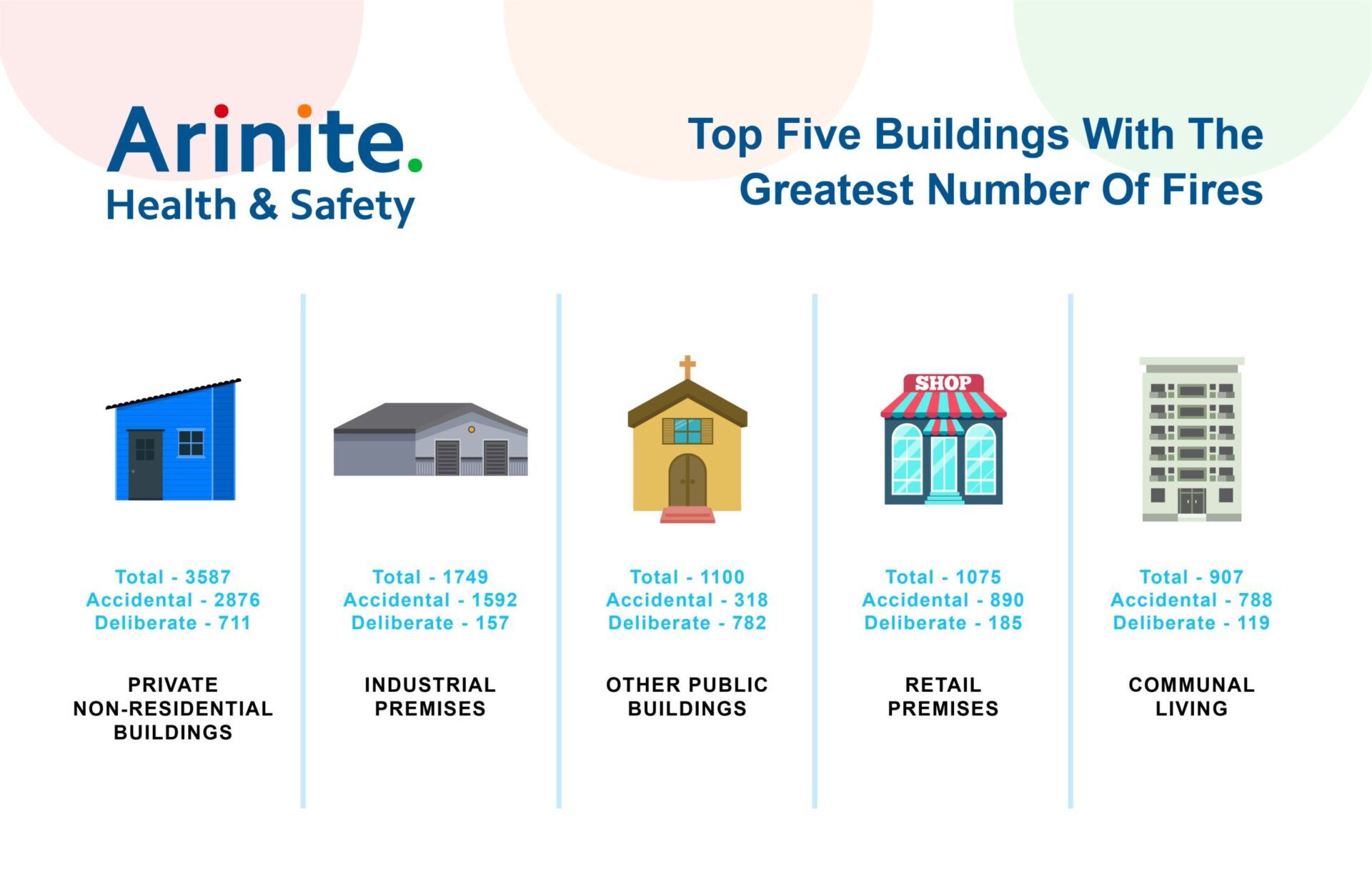
These buildings were attended by fire services 1,100 times during 2020-2021. Deliberate fires were significantly higher at these types of premises with 71.1% of fires being set intentionally. The remaining 28.9% of fires were accidental.
Many of these types of premises allow public traffic to flow freely in and around them. As a result of high footfall and due to the open access, these buildings are easy targets for fires to be set intentionally.
Other public buildings include: Car parks, Public admin/security/safety, Public toilets, Religious buildings, Sports pavilions and Transport buildings.
These buildings were attended by fire services 1,100 times during 2020-2021. Deliberate fires were significantly higher at these types of premises with 71.1% of fires being set intentionally. The remaining 28.9% of fires were accidental.
Many of these types of premises allow public traffic to flow freely in and around them. As a result of high footfall and due to the open access, these buildings are easy targets for fires to be set intentionally.
- Any fire that occurred in a (non-derelict) building, vehicle or outdoor structure
- Any fire involving fatalities, casualties or rescues
- Any fire attended by five or more pumping appliances
Private non-residential buildings
The buildings that have the most fires are private non-residential buildings. These types of buildings include: Private garages, Private garden sheds, Private greenhouses and Private summer houses. Garages are ordinarily used for storage of household overflow, such as tools, seasonal clothing and Christmas decorations. Sheds are also used for garden tools such as lawnmowers, which may require petrol to power them. Boxes stacked with decorations, clothing, and petrol pose a greater fire risk because the materials act as catalysts. With a high concentration of combustible materials, it is no wonder that the fire service attended 3,587 incidents in 2020/21. Of the 3,587 incidents attended, 80.2% were accidental compared to 19.8% that were deliberate.Industrial premises
Industrial premises includes: Industrial manufacturing, Industrial processing, Laboratory/research, Mines and quarries - above ground, Public utilities, Vehicle repair, Warehouses and bulk storage. The fire service attended 1,749 fires in 2020-21, with 91% of them being accidental and 9% being deliberate. The ratio of accidental to deliberate fires on industrial premises is the largest gap of any building type. Industrial premises will have a health and safety policy including a fire risk assessment and dedicated fire personnel, meaning that the amount of deliberate fires started will be reduced. Accidental fires can’t always be prevented, but they can be reduced and managed by having a robust and practical fire safety policy.Other public buildings
Free Consultation
Need Expert H&S Guidance?
Our qualified consultants can help you implement the right health & safety measures for your business.
Retail premises
Ranging from small independent shops to supermarkets and retail complexes, retail premises are the fourth most at risk building. Retail premises were attended by the fire service 1,075 times throughout 2020 - 2021. The majority of fires were accidental (82.8%) compared to deliberate (17.2%). Home improvement retail facilities store a high level of flammable materials such as white spirit and fire lighters. All retail premises will have fire safety protocols and tighter security that other building types, reducing the amount of deliberate fires.Communal living
Communal living includes: Boarding school accommodation, Military/barracks, Monastery/convent, Nurses'/Doctors' accommodation, Other residential home, Residential home, Sheltered housing and Student hall of residence. 907 fires were attended by the fire service. 13.1% of these fires were deliberate compared to the 86.9% that were accidental.Other buildings at risk of accidental and deliberate fires
Food and drink premises
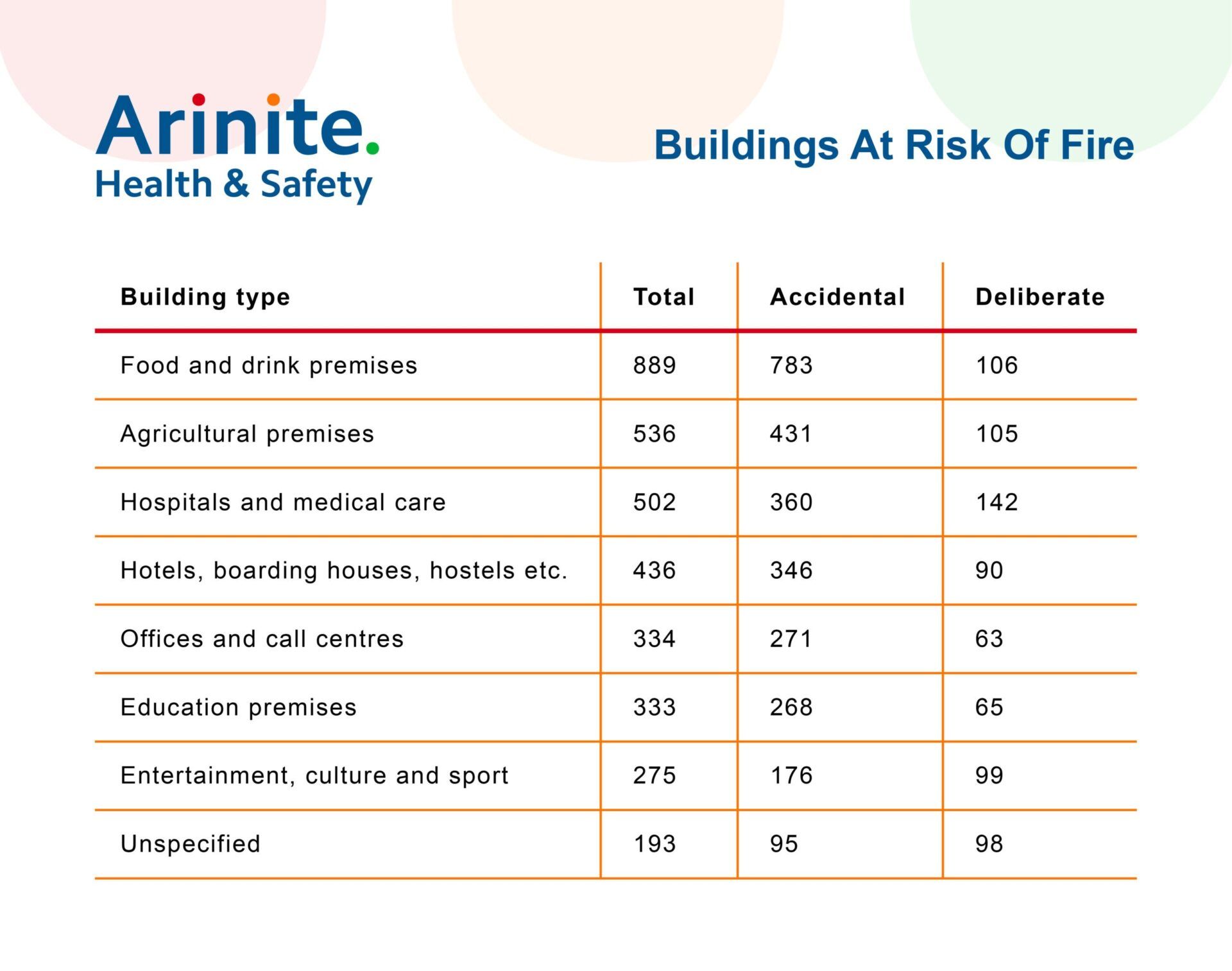
Restaurants and takeaways use flames to cook food daily, which explains why 889 fires were attended, with 88.1% of the fires being accidental and 11.9%, deliberate.Agricultural premises
Agricultural premises have many purposes including rearing livestock and horticultural cultivation. Large open spaces full of combustible materials such as seeds, dry grass and wheat can lead to unmanageable fires. Combining the combustible materials with wooden barn structures contribute to the amount of fires farms experience every year. Between 2020 and 2021, 536 fires were attended by the fire service in the UK. Of the 536 fires, 80.4% were accidental and 19.6% were deliberate.Hospitals and medical care
With thousands of patients seen daily by a medical professional, hospitals and medical care facilities are the 8th most flammable building in the UK. Faulty equipment and overloading on electrical outlets are some of the biggest causes of hospital and medical care facility fires. The fire service attended 502 fires at hospitals and medical centres, 71.1% of these fires were accidental and 28.3% were deliberate. Hotels, boarding houses, hostels Hotels, boarding houses, hostels etc. includes: Animal boarding, Boarding house and B&B for homeless/asylum seeker, Boarding house/B&B, Caravan site - in caravan/camper van, Hostel, Hotel/Motel, Other holiday residence and Youth hostel. With such a wide range of facilities it is no wonder that hotels, boarding houses and hostels made the top ten list of most flammable buildings. This style of building caters for the public meaning a strong fire safety policy will be in place. 436 fires were attended by the fire service across the UK, 79.4% of incidents were accidental compared to the 20.6% that were deliberate.Offices and call centres
The 10th most combustible building type consists of offices and call centres. Faulty equipment, clutter and human error are among the top reasons why fires break out in offices and call centres. During 2020- 2021, 334 fires were attended across the UK. 18.9% of these fires were accidental which is a large contrast to the 81.1% that were deliberate.Education premises
As educational premises are commonly filled with a large number of young people, the majority of the year, it is highly important to have an up to date fire safety plan in place. The majority of fires that happen in educational buildings are accidental, they can be caused by faulty wiring and by poorly maintained appliances. 333 fires were attended on educational premises by the fire service, 80.5% of these were accidental and 19.5%, deliberate.Entertainment, culture and sport
Large crowds of people watch sports and attend events every year, human error and electrical faults are two of the largest fire starters at these venues. The fire service responded to 275 fires, of which 64% were accidental and 36% deliberately set.Fire Safety Policies
Fires can happen anywhere, at any time. However, there are steps that businesses can take to prevent and protect themselves and their employees from fires. The first step is building a robust fire safety policy that includes designated fire safety personnel and fire action plan. One of the easiest ways of preventing a fire includes keeping areas free from mess. Removing unnecessary clutter, you can reduce the amount of time a building takes to set a blaze. Ensuring your fire extinguishers are serviced annually which is a legal requirement, having designated smoking areas that are the correct distance from the building and ensuring the premises are locked up correctly are some of the quickest and easiest ways of protecting your business from accidental and deliberate fires. Explore Arinite’s fire risk assessment guidanceB
Written by
Brendan Tuite
Health & Safety Expert at Arinite