What is COSHH? The Complete UK Guide for Employers
COSHH is one of the most far-reaching pieces of UK health and safety law and also one of the most misunderstood. The Control of Substances Hazardous to Health Regulations 2002 (COSHH) apply to almost every UK workplace, from manufacturing plants and construction sites to offices, hair salons, schools, and care homes. If your business uses, produces, or generates any substance that could harm someone's health, COSHH applies to you.
According to the Health and Safety Executive, around 12,000 lung disease deaths each year in Great Britain are linked to past exposures at work, alongside thousands more cases of occupational cancer, dermatitis, and asthma. The substances that caused them were mostly known. The controls that would have prevented them were mostly available. COSHH exists to close that gap, and the regulations are explicit about what employers are required to do.
This guide explains what COSHH is, what it covers, who it applies to, and what a compliant COSHH approach looks like in practice. It is written for UK employers, managers, and anyone responsible for health and safety in a workplace where hazardous substances are present.
What COSHH actually covers
COSHH is shorthand for the Control of Substances Hazardous to Health Regulations 2002, as amended. The regulations sit alongside the Health and Safety at Work etc. Act 1974 and set out specific employer duties for managing risk from hazardous substances.
The starting point is that employers must either prevent exposure to hazardous substances or, where prevention is not reasonably practicable, control exposure. The regulations are clear about which option comes first. Substitution with a safer alternative is preferred over engineering controls, which are preferred over personal protective equipment (PPE). PPE is the last line of defence, not the first.
The regulations apply to substances classified as hazardous to health, including substances labelled as toxic, harmful, irritant, or corrosive; biological agents; carcinogens, mutagens, and reproductive toxins; substances with Workplace Exposure Limits set out in HSE document EH40; and any other substance which can cause harm at the concentrations present.
COSHH does not apply to asbestos, lead, or radioactive substances, which are covered by their own separate regulations.
Who COSHH applies to
Every UK employer has duties under COSHH if their work activities involve hazardous substances. That includes substances brought into the workplace deliberately (cleaning products, paints, solvents, adhesives, laboratory chemicals, hair dyes) and substances created or released by work activities (welding fume, wood dust, flour dust, diesel exhaust, vehicle exhaust, fumes from cooking).
The regulations cover self-employed people, contractors on site, agency workers, and visitors who could be exposed by your activities. Employers also have duties towards anyone else who could be affected, including members of the public.
There is no minimum business size that exempts you from COSHH. A small office that uses cleaning chemicals is covered. A sole trader running a body shop is covered. A multi-site logistics business handling fuels and lubricants is covered.
COSHH duties cannot be delegated away through contracts. If your contractor handles your hazardous substances, you still hold duties as the controlling employer. This is one of the most common gaps Arinite's Chartered consultants find on first audit.
What counts as a hazardous substance under COSHH
Need Expert H&S Guidance?
Our qualified consultants can help you implement the right health & safety measures for your business.
The definition is broader than most people assume. It includes:
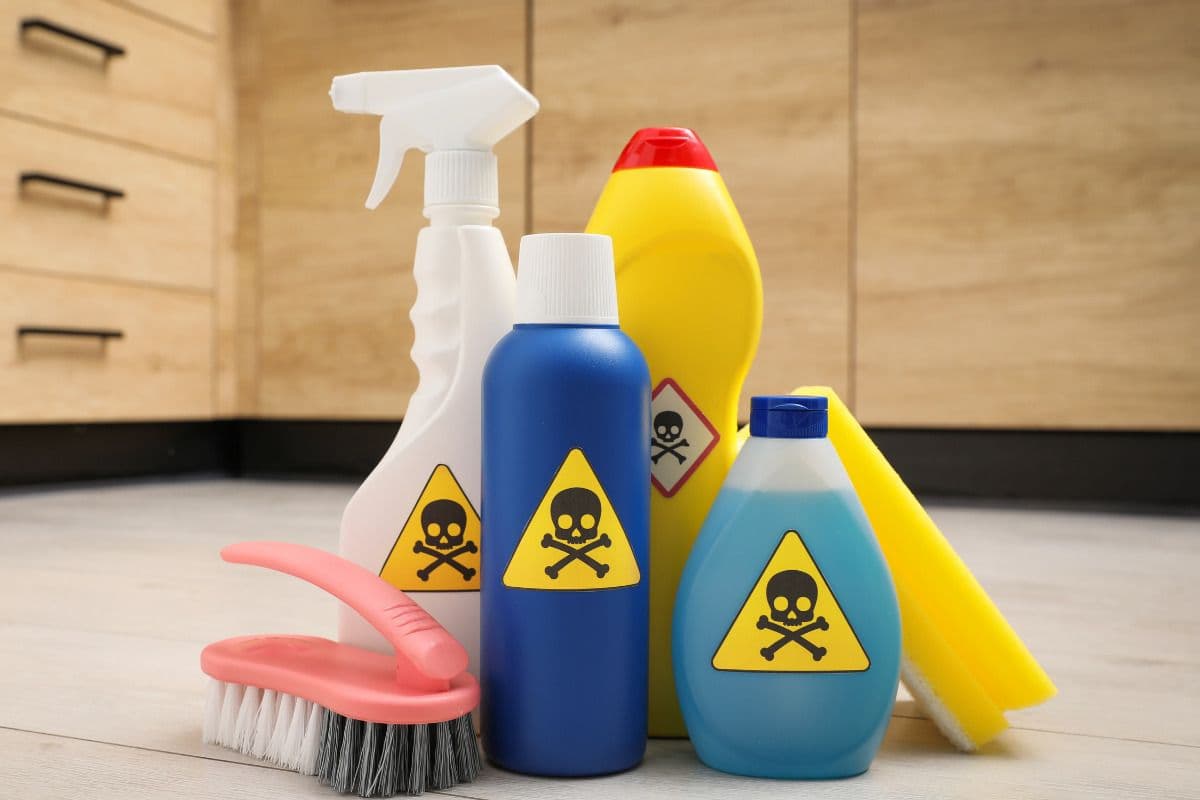
- Chemicals classified as hazardous to health under GB CLP (Classification, Labelling and Packaging) regulations. These carry the familiar hazard symbols on their packaging: skull and crossbones, exclamation mark, exploding chest, and so on.
- Substances with Workplace Exposure Limits listed in EH40, the HSE publication updated regularly with the current legal limits.
- Biological agents including bacteria, viruses, fungi, and parasites that could cause infection, allergy, or toxicity at work. This was a high-profile issue during COVID-19 and remains relevant in healthcare, laboratories, waste handling, and care home settings.
- Carcinogens, mutagens, and reproductive toxins (CMRTs), which carry additional control requirements.
- Dusts present at high concentrations, including wood dust, flour dust, silica, and any dust that the workplace generates in concentrations that could harm health.
- Fumes and vapours generated by processes, including welding fume (reclassified by HSE as a human carcinogen in 2019), soldering, hot work, and cooking.
- Mixtures of any of the above, including dilutions, blends, and substances produced as a byproduct of other work.
Substances do not need to be obviously dangerous to be hazardous under COSHH. Flour, sawdust, and certain cleaning products all count. The test is whether they can harm health at the levels present in your work, not whether they look or smell dangerous.
The 8 elements of COSHH compliance
The HSE describes COSHH compliance as eight connected duties. Together they form the framework for a compliant approach. None of them is optional.
1. Assess the risks. A COSHH risk assessment identifies the substances present, who could be exposed, how, and what the resulting risk to health is. Generic assessments are not compliant. The assessment must reflect your actual workplace, your actual substances, and your actual tasks.
2. Decide what precautions are needed. Based on the assessment, identify the controls required. The hierarchy of control applies: eliminate, substitute, engineer (ventilation, enclosure), administer (procedures, training), then PPE as last resort.
3. Prevent or adequately control exposure. Implement the controls identified. "Adequately controlled" means below any applicable Workplace Exposure Limit, and as low as is reasonably practicable. For carcinogens and asthmagens, the requirement is stricter still.
4. Ensure control measures are used and maintained. Engineering controls degrade if not maintained. Local Exhaust Ventilation (LEV) systems must be thoroughly examined and tested at least every 14 months by a competent person. PPE must be inspected, replaced, and used correctly. Procedures must be followed in practice, not just written.
5. Monitor exposure. Where the assessment indicates a need, exposure must be measured (typically by air sampling) and compared against the limits. Records must be kept for at least 5 years (40 years for carcinogen exposure data).
6. Carry out appropriate health surveillance. Where exposure to certain substances is likely (such as those that cause asthma, dermatitis, or cancer), employees must be offered health surveillance by a competent occupational health professional. Records must be retained for 40 years.
7. Prepare plans and procedures for accidents, incidents and emergencies. Spillages, releases, fires involving chemicals, and similar events must have written procedures that staff know and can act on.
8. Ensure employees are informed, trained, and supervised. Anyone working with or around hazardous substances must understand the risks, the controls, and what to do if something goes wrong. This is an ongoing training duty, not a one-off induction.
Employer duties under COSHH
The eight elements above translate into a set of concrete employer duties. In practice, a compliant employer will be able to evidence each of the following:
- A current written COSHH assessment for every hazardous substance and process
- A Safety Data Sheet for every hazardous chemical product, kept accessible to staff
- Written control procedures and a clear hierarchy applied (substitute first, PPE last)
- LEV examination and test certificates within the last 14 months where applicable
- Training records showing each employee has received COSHH training appropriate to their role
- Health surveillance arrangements in place where required, with retained records
- Emergency procedures documented and rehearsed
- A review schedule with evidence of recent reviews and updates after change
The competent person duty under the Management of Health and Safety at Work Regulations 1999 applies here. Most UK businesses appoint either an employee or an external consultant to act as the competent person, advising the business on what is required to meet duties including COSHH.
Common COSHH compliance failures
Across thousands of audits, the same gaps appear repeatedly. The most common include:
Generic, template-only assessments. COSHH assessments downloaded from the internet and signed off without actually walking the workplace or talking to the people doing the work. These fail at the first HSE inspection because they do not reflect the actual operation.
Missing Safety Data Sheets, or sheets older than the current product. Suppliers reformulate. Old SDSs become inaccurate. Most workplaces hold a folder of SDSs that has not been updated for years.
LEV systems past their 14-month test. Local Exhaust Ventilation is one of the highest-impact COSHH controls and one of the most commonly neglected. Test certificates often lapse without anyone noticing.
Health surveillance assumed not to apply. Many employers assume health surveillance is only for industrial settings. In practice, anyone working with respiratory sensitisers, skin sensitisers, or carcinogens may require it. Hair salons, bakeries, joinery workshops, and many care home environments all fall under this.
No evidence of training. Even where training has happened, the records often do not exist. Without records, the HSE position is that the training did not happen.
Static reviews. COSHH assessments are reviewed annually by date rather than triggered by actual change. New substances appear without being assessed. Old assessments persist after the process has changed.
A health and safety audit is the most effective way to identify which of these gaps your business has. Most clients find at least three on first audit.
COSHH across different sectors
The substances differ but the duties do not. A few sector-specific notes:
- Care homes. Cleaning chemicals, hair care products, biological agents from healthcare activities, medications. See our work with care home clients for sector-specific applications.
- Construction. Cement dust, silica dust, solvents, isocyanates in paints, welding fume, diesel exhaust. Silica was reclassified by HSE as a critical focus and exposure limits are being reviewed downwards.
- Manufacturing. Process-specific chemicals, cutting fluids, metalworking fluids (subject to specific HSE guidance), welding fume, wood and flour dust.
- Hospitality and catering. Cleaning chemicals, sanitisers, oven cleaners, dishwasher chemicals, flour dust, and increasingly the recognition of cooking fume exposure in commercial kitchens.
- Offices and professional services. Lower risk overall, but cleaning products, toner from photocopiers and printers, and increasingly air quality from poor ventilation all sit within COSHH scope.
The duty is the same regardless of sector. The substances and controls differ, and so do the practical demands on the employer.
When to bring in a Chartered consultant
Many UK businesses manage COSHH compliance internally with the right tooling and a trained competent person. Others find COSHH is more complex than expected, particularly where multiple substances interact, where Workplace Exposure Limits are involved, where health surveillance is needed, or where the business operates across multiple sites or countries.
Arinite's Chartered consultants work with 1,500+ businesses across 50+ countries. The work includes COSHH assessments, LEV reviews, health surveillance setup, training programmes, and acting as the competent person for businesses without in-house health and safety expertise. 100,000+ Employees Protected. ISO 45001:2018 certified. 15+ years of practice.
The fastest way to understand your COSHH position is a 30-minute Free Gap Analysis Call. A structured review of your current arrangements, the gaps that matter most, and what to do about them. No commitment.
Book My Free Gap Analysis Call or call +44 (0)20 7947 9581.
Frequently asked questions
What does COSHH stand for? COSHH stands for the Control of Substances Hazardous to Health. The current regulations are the Control of Substances Hazardous to Health Regulations 2002 (as amended).
What is a COSHH assessment? A COSHH assessment is a written assessment of the risks to health from hazardous substances in a workplace, and the controls needed to prevent or adequately control exposure. It must reflect the actual substances, tasks, and people involved, not a generic template.
Who is responsible for COSHH compliance? The employer is responsible. In practice, the duty is usually delegated to a manager, a designated employee, or an external competent person. The legal duty stays with the employer regardless.
How often should COSHH assessments be reviewed? COSHH assessments must be reviewed if no longer valid, or where there has been a significant change. Many businesses adopt an annual review cycle as good practice, but the legal test is validity, not the calendar. A new substance, a new process, an incident, or a change in personnel can all trigger a review.
Do small businesses need COSHH assessments? Yes. COSHH applies to every UK employer that uses, produces, or generates hazardous substances. There is no exemption for small businesses. A sole trader using cleaning chemicals or solvents is covered.
What is the difference between COSHH and RIDDOR? COSHH is about controlling exposure to hazardous substances. RIDDOR (Reporting of Injuries, Diseases and Dangerous Occurrences Regulations 2013) is about reporting workplace incidents to the HSE. They apply to different stages of the same problem. COSHH aims to prevent harm. RIDDOR requires you to report it if harm occurs.
What are the penalties for COSHH non-compliance? COSHH offences are prosecuted under the Health and Safety at Work etc. Act 1974. Penalties depend on severity, harm caused, and the size of the organisation. Unlimited fines and, in serious cases, imprisonment of duty holders are possible. The HSE publishes prosecutions on its enforcement register.
Where can I find Workplace Exposure Limits? The Workplace Exposure Limits for specific substances are listed in HSE document EH40, updated regularly. EH40 is the legal reference point for adequate control of exposure.
Written by
Arinite Health & Safety Consultants
Health & Safety Expert at Arinite