What Does HSE Stand For? 14 Things UK and Global Businesses Must Know
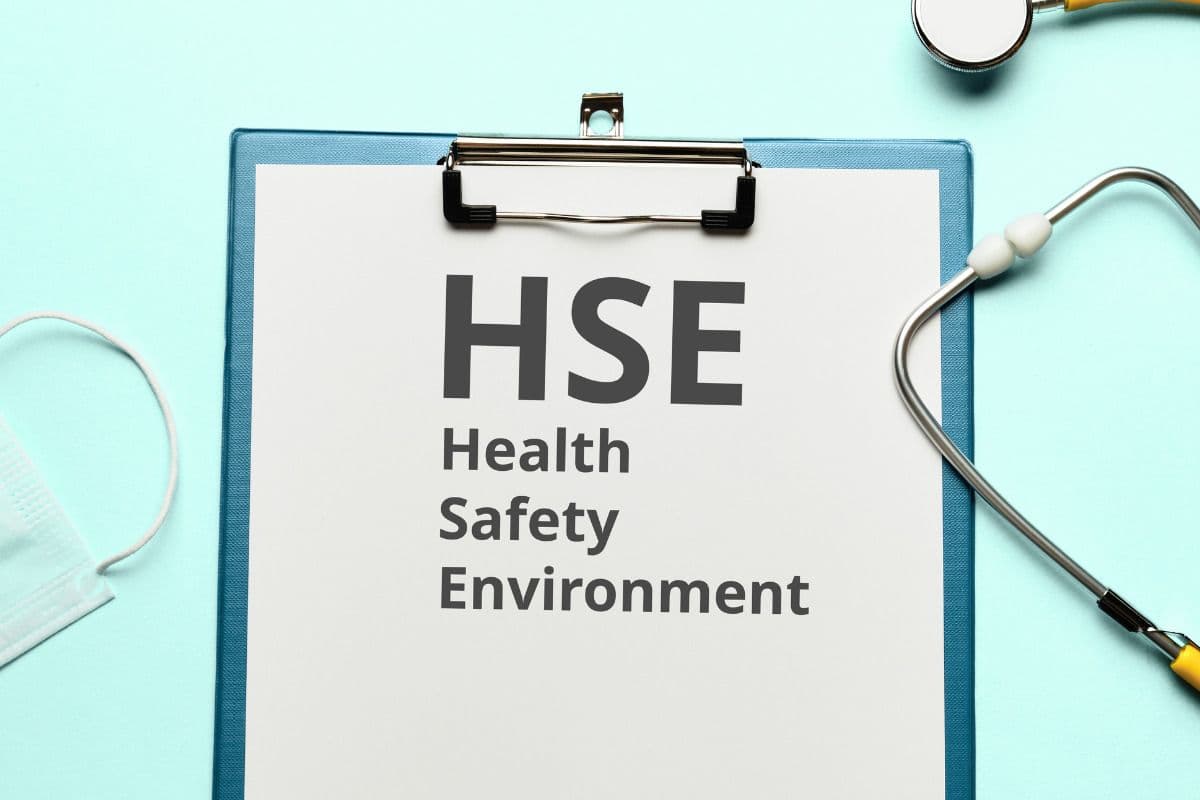
HSE stands for "Health and Safety Executive" in the UK and for "Health, Safety and Environment" almost everywhere else in the world. In Great Britain it is the name of the national workplace safety regulator. In international corporate language it is the name of the function that combines occupational health, workplace safety, and environmental compliance into one accountable team. The acronym is the same, the meaning shifts with the audience, and that mismatch is exactly where UK businesses operating abroad (and international groups operating in the UK) most often trip up.
If you have searched for "what does HSE stand for", you almost certainly need more than a one-line definition. You need to know which HSE applies to your situation, what it expects of you, and how to discharge those duties across multiple countries without duplicating effort. Below are the 14 things every UK and global business should know, with practical links to the operational support behind each one.
For the regulator's own page, see HSE: About us. For the founding legislation, see the Health and Safety at Work etc. Act 1974 on legislation.gov.uk.
1. HSE = Health and Safety Executive (UK)
In the United Kingdom, "HSE" is the Health and Safety Executive, the national regulator responsible for the enforcement of workplace health and safety law in Great Britain. It is a non-departmental public body sponsored by the Department for Work and Pensions. If you receive a letter, an inspector visit, or an improvement notice from "HSE", this is who is contacting you. Most UK businesses meet the regulator's expectations by engaging chartered Health and Safety Consultants who already speak its language fluently.
2. HSE = Health, Safety and Environment (Global Corporate Usage)
Outside the UK, "HSE" usually refers to the corporate function of Health, Safety and Environment, often written as HSE, HSSE (with Security), or EHS in North America. This is the team or department inside a multinational that owns occupational safety, workplace health, and environmental compliance together. For international groups, the practical question is which definition your stakeholder is using before you respond. Global Health and Safety Consultants routinely build out HSE functions for clients across 50+ countries.
3. HSE Northern Ireland Is a Separate Body
Need Expert H&S Guidance?
Our qualified consultants can help you implement the right health & safety measures for your business.
A common point of confusion: in Northern Ireland the equivalent regulator is the Health and Safety Executive for Northern Ireland (HSENI), not the same organisation as HSE in Great Britain. The duties are materially similar but the enforcement body, the contact route, and some specific regulations differ. International groups with sites in both jurisdictions should treat them as two regulators on one island.
4. HSE Enforces, but the Duty to Comply Sits With Employers
The Health and Safety at Work etc. Act 1974 places the primary duty on employers, the self-employed, and (to a lesser degree) employees themselves. HSE's role is to inspect, advise, investigate, and enforce. This means you cannot outsource accountability to HSE, you discharge it to them. Most businesses use a combination of Health and Safety Consultants, Health and Safety Consultants and Software, and structured Health and Safety Audits to build the evidence trail HSE expects to see.
5. HSE Inspectors Can Visit Without Notice
HSE inspectors have statutory powers of entry under section 20 of the 1974 Act. They can arrive unannounced, examine records, interview staff, take samples and photographs, and require information. The right answer to an inspector is "yes, here is everything you have asked for, dated, signed, and in one place", which is exactly what an integrated platform plus a named competent person delivers. For the official enforcement overview, see HSE's enforcement section.
6. HSE Can Issue Improvement and Prohibition Notices
Two of HSE's most-used enforcement tools are the Improvement Notice (you have a defined period to fix a specific failing) and the Prohibition Notice (you stop the activity immediately). Both are public, both are reportable on tender questionnaires for years afterward, and both can be appealed only within tight statutory time limits. Annual independent Health and Safety Audits are the most effective way to spot the issues that lead to notices before HSE does.
7. HSE Recovers Its Costs Under Fee for Intervention (FFI)
Under the Fee for Intervention scheme, if HSE finds a "material breach" of health and safety law during a visit, it charges the duty holder for the inspector's time at an hourly rate (currently in the region of £180 per hour, subject to annual review). A single visit can produce a multi-thousand-pound invoice on top of the cost of fixing the breach. This is a direct financial argument for preventive Health and Safety Audits and a properly maintained health and safety policy.
8. HSE Publishes the UK's Authoritative Statistics
HSE produces annual statistics on workplace fatalities, non-fatal injuries, work-related ill health, and enforcement activity. These are the figures HR teams, insurers, lawyers, and investors reference in the UK. Reviewing the current data once a year against your own incident profile is one of the cheapest, highest-value pieces of work a board can do. See the HSE statistics portal.
9. HSE Requires Certain Incidents to Be Reported Under RIDDOR
Under the Reporting of Injuries, Diseases and Dangerous Occurrences Regulations 2013 (RIDDOR), employers must report specified work-related deaths, serious injuries, occupational diseases, and dangerous occurrences to HSE. The duty to report sits with the employer, and the deadlines are short. For the regulator's guidance, see HSE: RIDDOR. Most modern health and safety software platforms include a RIDDOR decision tree to remove the guesswork from "do we need to report this?".
10. International HSE Equivalents Vary by Country
For UK-headquartered businesses operating abroad, the UK HSE has counterparts in every developed economy, each with its own name, scope, and documentary requirements:
- France: INRS and the regional CARSAT bodies, supported by the labour inspectorate. Mandatory document: the DUERP.
- Spain: the INSST (Instituto Nacional de Seguridad y Salud en el Trabajo) and the Inspección de Trabajo. Mandatory framework: the Ley de Prevención de Riesgos Laborales (LPRL).
- Germany: the BAuA (Bundesanstalt für Arbeitsschutz und Arbeitsmedizin) and the DGUV (statutory accident insurance institutions).
- Italy: INAIL and the local ASL units, under D.Lgs. 81/2008.
- Netherlands: the Nederlandse Arbeidsinspectie. Mandatory document: the RI&E.
- United States: OSHA (Occupational Safety and Health Administration), federal level, with state plans.
International Health and Safety Consultants translate UK HSE expectations into the local equivalent so corporate standards travel intact across borders. The European overview is well summarised by EU-OSHA, and global frameworks by the ILO.
11. HSE in the Corporate Sense Usually Means a Combined H, S, and E Programme
When a multinational says "HSE function", it normally means one team running three workstreams together:
- Health: occupational health surveillance, mental health, work-related ill health.
- Safety: risk assessment, training, incident management, contractor control.
- Environment: waste, emissions, energy, water, ISO 14001 alignment.
Building this as three separate fiefdoms is expensive and produces conflicting evidence. Building it as a single accountable function, ideally with one Health and Safety Consultants and Software stack, is the model used by the most mature international groups.
12. ISO 45001 and ISO 14001 Are the International Common Language
The two international standards that make a corporate HSE function legible across countries are ISO 45001 (occupational health and safety management) and ISO 14001 (environmental management). If you operate in multiple jurisdictions and your tender, investor, or insurance counterparties keep asking the same questions, certifying to ISO 45001 (and increasingly ISO 14001) answers most of them in advance.
13. HSE Compliance Is Now a Procurement and M&A Issue
It used to be enough to "not get prosecuted". That bar has moved. Procurement teams at large UK and global buyers now ask suppliers for evidence of policy, training records, audit reports, incident data, and (often) ISO 45001 certification before they will issue a contract. M&A diligence asks the same questions plus enforcement history. A robust, evidenced compliance position therefore protects revenue and valuation, not just safety. Health and Safety Audits carried out by an independent consultancy are the standard evidence pack buyers expect.
14. The Cheapest Route Is a Single Accountable Provider
The most efficient operating model for a UK-and-international business is a single provider who can act as your competent person, keep your policy and training current, run your annual Health and Safety Audits, respond to HSE correspondence in the UK, and engage equivalently in your other operating countries. Arinite has delivered this combined model for 1,500+ businesses across 50+ countries, with 15+ years of experience and 100,000+ employees protected.
Frequently Asked Questions
What does HSE stand for in the UK?
In the UK, HSE stands for the Health and Safety Executive, the national workplace safety regulator for Great Britain. Northern Ireland's equivalent is HSENI.
What does HSE stand for internationally?
Internationally, HSE usually stands for Health, Safety and Environment, referring to the corporate function that owns those three workstreams together. North American organisations often use EHS (Environment, Health and Safety) to mean the same thing.
Is HSE the same as HSSE or EHS?
They overlap. HSSE adds Security to HSE. EHS is the North American word order for the same combined function. The substantive duties are very similar; the acronym signals the speaker's region or sector.
How does the UK HSE enforce the law?
Through inspection, investigation, Improvement Notices, Prohibition Notices, Fee for Intervention charges, and (in serious cases) prosecution. Decisions are guided by HSE's published Enforcement Policy Statement.
Do I need a competent person to deal with HSE matters?
Yes. The Management of Health and Safety at Work Regulations 1999 require every employer to appoint one or more competent persons. Most SMEs and many mid-market groups engage external Health and Safety Consultants to fill this role on a retainer basis.
How do international HSE expectations relate to the UK?
UK HSE expectations are broadly aligned with EU and ILO frameworks, with local variations in documents (DUERP, RI&E, DVR, LPRL records, DGUV) and named roles. Global Health and Safety Consultants harmonise these into a single corporate standard.
Get the Right HSE Position, in the UK and Globally
Whichever HSE you are dealing with, the UK regulator, an international corporate function, or both at once, the work is the same: a current policy, evidenced risk assessments, trained people, tested procedures, documented audits, and a named accountable expert. Arinite combines chartered Health and Safety Consultants, purpose-built Health and Safety Consultants and Software, independent Health and Safety Audits, and proven International Health and Safety Consultants capability across 50+ countries.
Speak to our team to scope the right level of HSE support for your UK and global operations.
Written by
Arinite Health & Safety Consultants
Health & Safety Expert at Arinite