Has Homeworking Caused a Surge in Musculoskeletal Conditions?

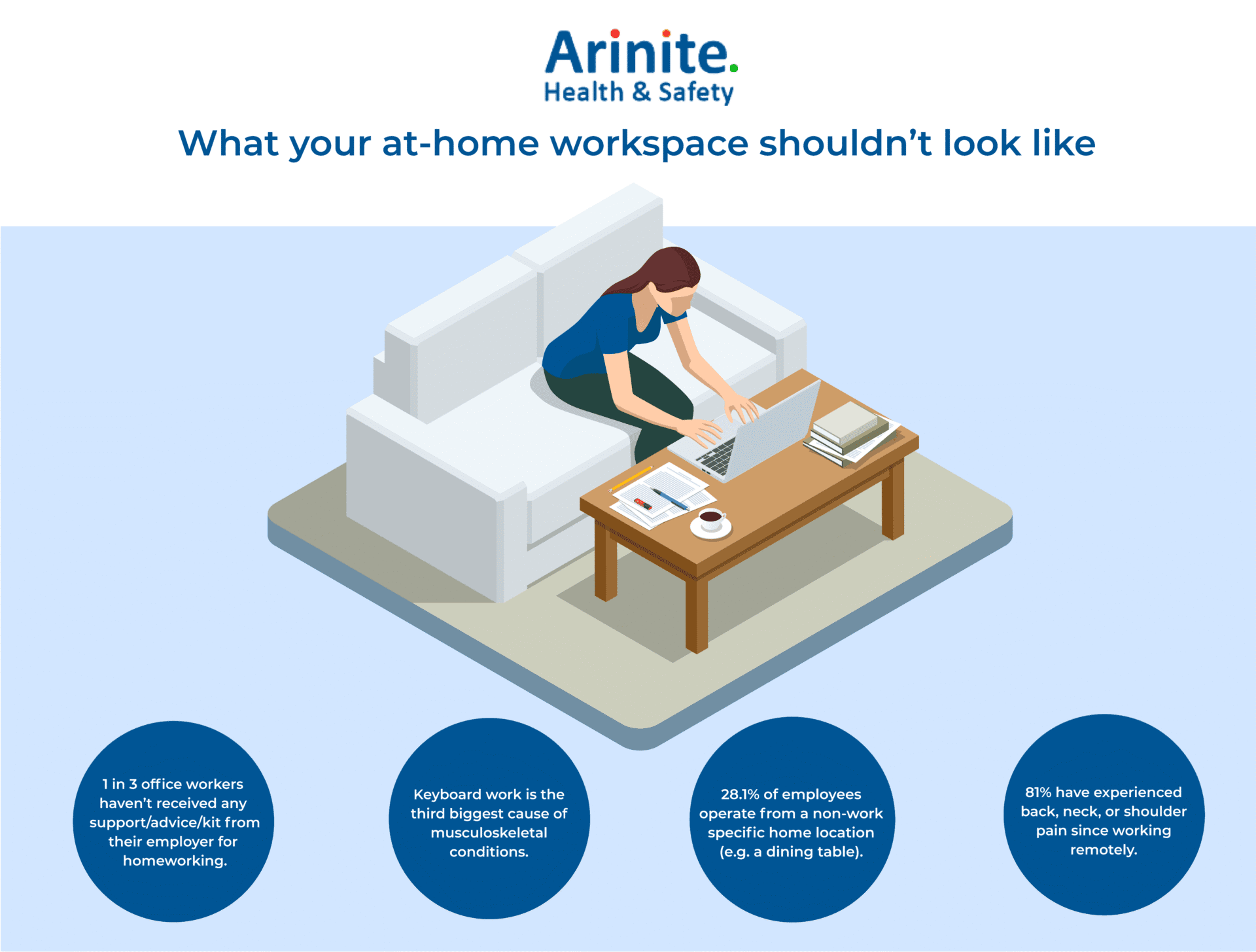
The rise of COVID-19 has made homeworking commonplace, with reports finding 46.6% of British employees worked from home at the height of lockdown. Many office workers enjoyed operating remotely at first, with the benefit of not having to commute. Still, now the novelty has worn off for most of us, the negative physical implications have started to show.
Without at-home workspaces prepared, many employees worked from unsuitable places like the sofa, kitchen, or even bed, resulting in a range of musculoskeletal conditions.
Arinite has compared research from 2019 and 2020 to determine whether UK workers received enough support from their employers to cope with the change in their work environment.
What are musculoskeletal disorders?
Musculoskeletal disorders can affect muscles, bones, and joints. Desk jobs are common causes of these conditions, which can lead to recurrent pain, swelling, aches, and stiff joints.
When severe, the discomfort experienced can interfere with everyday activities such as typing. Maintaining a healthy posture while working is vital for preventing these symptoms.
How much have work-related cases increased?
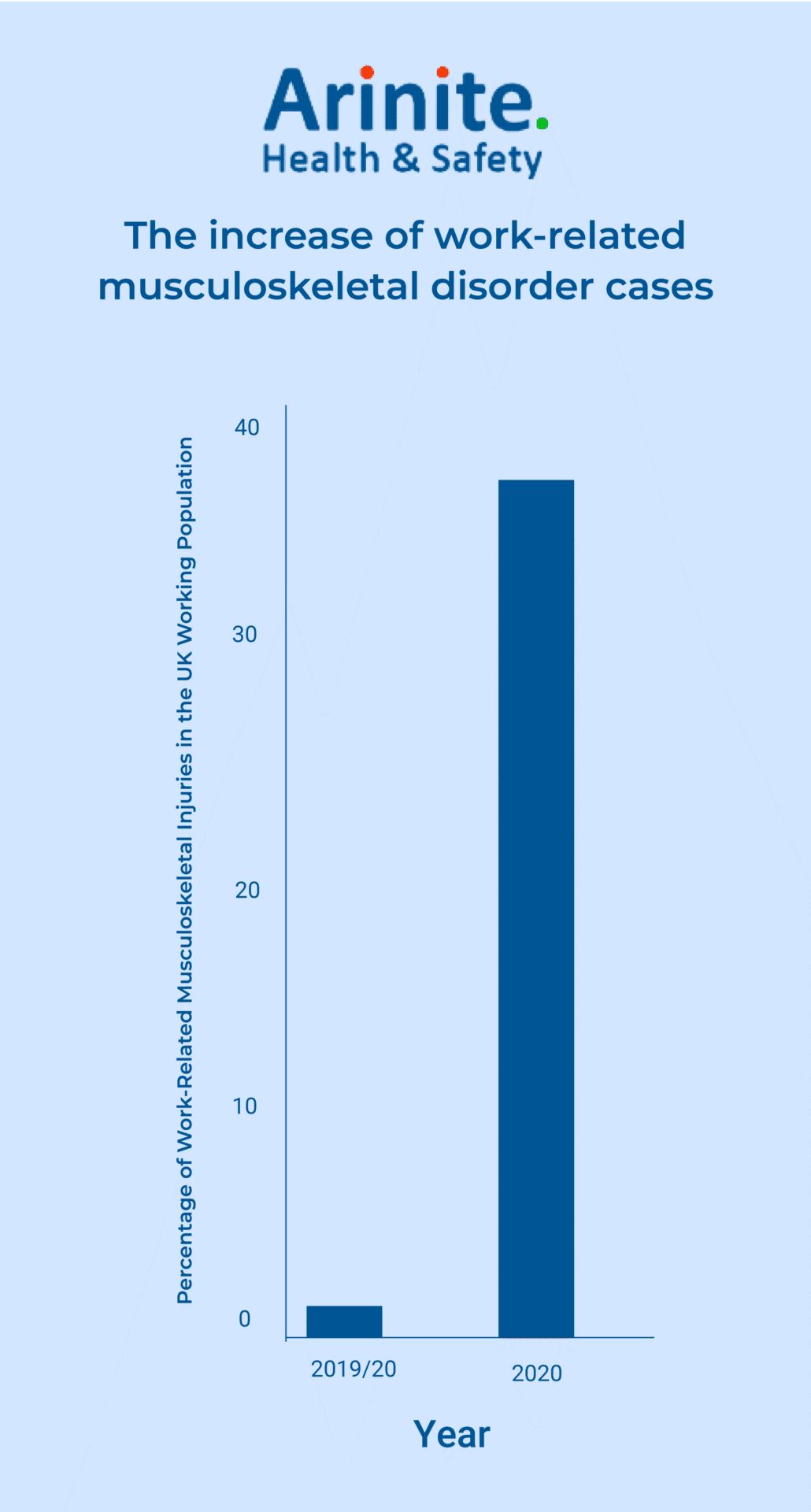
In 2019, only 1.4% of the working population experienced work-related musculoskeletal disorders. This low statistic may be because only 5.1% of the total UK workforce were mainly working in their own home. Whereas in 2020, many of us have had no choice but to operate remotely.
According to ONS, 46.6% of British employees did some work at home during the lockdown. As a result, last year saw an astronomical 37.7% of musculoskeletal cases connected to work.
Keyboard work is the third most significant cause of aches and pains.
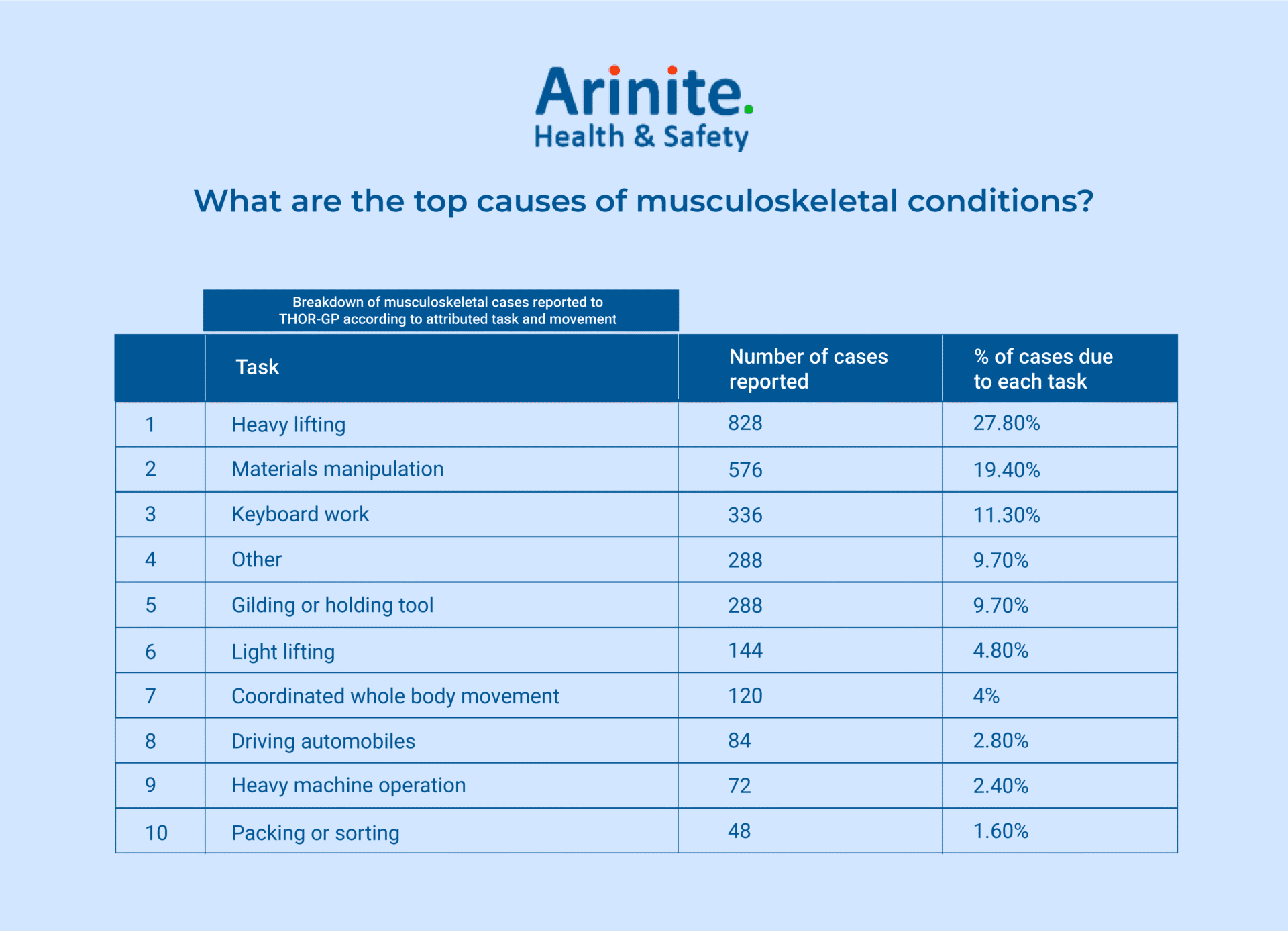
Even before the rise of remote working, keyboard work was cited as the third biggest work-related cause of musculoskeletal conditions, overtaking heavy machine operation. This risk has been heightened further by workers operating from unsuitable at-home workstations.
In September 2020, a survey revealed that 81% of employees working remotely during the first lockdown had experienced back, neck, or shoulder pain.
Nearly a quarter of respondents were affected by these symptoms often or all the time. Another 46% were taking more painkillers than they would like, to reduce the aches and pains.
Do homeworkers have a suitable workspace?
In, just over 28% of UK employees admitted to operating from a non-work specific home location. Working from an inappropriate and unprofessional set-up such as slouching over a dining table, can cause neck, back, and hip pain.
Although 41.2% of respondents used a dedicated workroom or office, many aches and pains can still occur if you don't put the necessary precautions in place.
To maintain a good posture while working at a desk:
- adjust your chair to support your lower back
- set the chair height so that your forearms and wrists remain straight when using the keyboard
- ensure your knees are slightly lower than your hips
- keep your feet resting on the floor and don’t cross your legs
- adjust your computer or use a laptop stand so that the top of the screen is at eye level
How are employers helping?
Without prior knowledge that working from home would become the norm, those without a home office didn’t have much time to prepare. But is it the employee’s or employer’s responsibility to ensure at-home workspaces are appropriate?
More than a third of office workers claimed they hadn’t received any support, advice, or equipment from their employer to assist with homeworking during lockdown. A staggering 89% of people who are temporarily working from home and are in pain haven’t told their employers.
The law doesn't require employers to conduct home workstation assessments for employees working remotely temporarily. However, they should still offer advice.
According to HSE, if the homeworking period extends, employers should regularly contact workers to address whether improvements need making and deliver equipment if necessary.
Although the government’s advice for people to work from home where possible is likely to end, it’s unclear when that will be. Companies may also continue offering homeworking to employees as a benefit, as 39% of Brits want to sometimes work from home after lockdown.
To aid permanent homeworkers, employers must provide information on how to operate comfortably to avoid developing musculoskeletal conditions. Regularly communicating with staff members will help to prevent any long-term issues developing too. On top of this, employers must instruct staff to complete a homeworking risk assessment and a display screen equipment assessment. The health and safety policy may also need adjusting to cover homeworking.
Robert Winsloe, Managing Director at Arinite
, says: “Creating a suitable at-home work environment is crucial to preventing employees developing physical issues that can have long-term implications.
“Although not everyone has a home office, there are always adjustments you can make or adaptations you can add to equipment to create a more supportive set-up.
“Even if workers have a dedicated workspace, it doesn’t mean they’re aware of how to operate in a way that protects themselves from aches and pains.
“With homeworking likely to continue in the future, employers should consider how to care for their remote staff’s wellbeing as part of their health and safety practices.
“Putting precautions in place will prepare businesses for the possibility of remote working remaining commonplace.”
About Arinite
Need Expert H&S Guidance?
Our qualified consultants can help you implement the right health & safety measures for your business.
Arinite’s Health and Safety Consultancy provides professional health and safety services, which now includes a complete coronavirus risk assessment. The company supports a diverse customer base such as health and social care, financial services, NHS, schools, and many other sectors across the UK, Ireland, and numerous countries worldwide.
We strive passionately to develop a thorough understanding of our clients' wants and needs to ensure they achieve their business goals. The Arinite Health and Safety Consultancy is considered a genuine collaborative business partner.
The partnership begins by providing advice to ensure our clients are compliant with all health and safety legislation, including any new legislation released throughout the pandemic.
View the full dataset here: Arinite Working from Home Musculoskeletal Conditions Master Spreadsheet Data
Written by
Brendan Tuite
Health & Safety Expert at Arinite