Understanding Fire Risk Assessment for 2023

This blog post examines how crucial a fire risk assessment is to protecting lives and property. It sheds light on what elements are essential for such an assessment and ways to select qualified personnel who can perform it effectively.
Get informed and be prepared in case of emergency with your very own thorough evaluation today!
Short Summary
- Fire risk assessments are essential for safety and are legally required in 2023.
- A fire risk assessment consists of 3 key components: identifying hazards, evaluating risks and implementing control measures through significant findings.
- Regular review and updates of fire risk assessments must be conducted to maximise effectiveness in emergencies.
The Importance of Fire Risk Assessments
A fire safety risk assessment minimises the potential for danger and consequences of fire through significant findings. They include identifying hazards, creating an action plan and overseeing proper measures to ensure all on-premises (including visitors) are safe from any injury caused by a blaze.
A fire safety risk assessment should be conducted regularly with accurate reviews to guarantee they remain effective against future risks or otherwise take new ones into account, forming essential elements towards upholding overall fire protection.
Legal Requirements for a Fire Risk Assessment
Need Expert H&S Guidance?
Our qualified consultants can help you implement the right health & safety measures for your business.
Fire safety is a legal requirement, and there are penalties for not following regulations as it can lead to hazards causing harm. Fire risk assessments must be conducted by individuals deemed competent or responsible for these measures. They should regularly document their findings on premises with more than five people inside them.
These assessment results must be reviewed periodically to avoid infringing fire-related laws.
For buildings shared between several occupants, like landlords and employers, they must ensure all current legislation related to a fire safety risk assessment has been followed within the areas they manage.
Consequences of Non-Compliance to a Fire Risk Assessment
Failing to stick to fire safety regulations can have disastrous consequences, such as death, unlimited fines and jail sentences.
It is essential for all businesses owning premises to prioritise their property's safety by keeping up with the required standards or legal repercussions and an increased probability of disasters.
Compliance helps protect people's lives while safeguarding any organisation's financial investments against costly liabilities from fire damages.
Components of a Fire Safety Risk Assessment
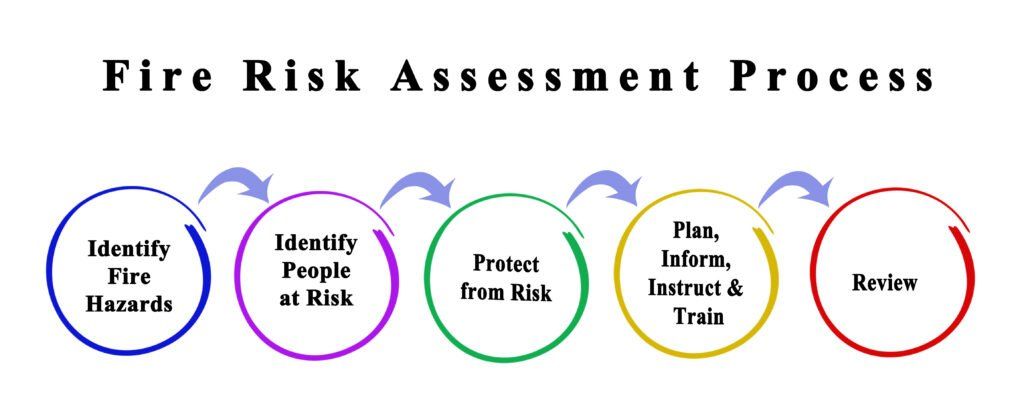
Understanding fire risks and enacting necessary safety measures is critical to any business. Analysing requires a complete assessment comprising three key steps: assessing hazards, analysing the potential associated risks and then implementing corresponding control procedures.
Whether using a small enterprise or outsourcing risk management services to a large organisation, these core components must be accurately addressed to protect inhabitants from the danger of fires.
Identifying Hazards for a Fire Risk Assessment
Fire safety measures need to be conducted to reduce risks. This will include looking at ignition sources such as open flames and electrical equipment, potential fuel sources like combustible materials in a building or structure and oxygen availability for fires to start up.
A fire door should always remain shut to help lower any fire risks present within an area if installed correctly; this is one step towards improving safety measures when assessing these possible hazards, such as local fire, from occurring.
It is vital to identify all relevant elements that may contribute to danger before making appropriate recommendations on how to best handle them with respective necessary precautions (such as fire extinguishers and doors), ensuring maximum security, too!
Evaluating Risks for a Fire Risk Assessment
Identifying potential fire hazards before a local fire occurs is paramount for the safety of people and property. It's essential to assess this risk using a matrix to decide which ones need prompt action or which firefighting equipment must be readily available for general fire precautions.
In deciding what measures are accepted, one must always consider ALARP (As Low As Reasonably Practicable) principles when assessing local fire danger levels.
Risk evaluation is essential in maintaining a safe environment from these dangerous incidents.
Implementing Control Measures to a Fire Risk Assessment
As part of a fire risk assessment, it is necessary to identify and evaluate any potential risks before implementing effective control measures.
It includes storing and handling combustible materials, building with flame retardant components, and ensuring that all safety-related equipment like alarms, extinguishers or sprinklers are regularly serviced.
All these steps help protect people within the premises from serious harm in the case of an unexpected fire event.
In summation, ensuring appropriate measures are taken as identified through comprehensive risk assessment related to fires must remain the top priority when considering one's security over time.
Regular Review and Updates to a Fire Risk Assessment
Carrying out fire risk assessments is not a one-off procedure. Frequent evaluations and modifications are necessary to consider differences in building use, occupants and protective elements for combating fires.
Vigilance and proactivity concerning fire safety must be kept up as fresh risks emerge, or already existing preventive means may become less efficient over time.
Executing regular risk assessment checks guarantees that the structure meets all criteria while staying safe for its inhabitants, too.
When to Review a Fire Risk Assessment
Regular and significant changes to the premises or work organisation should prompt a review of one's fire risk assessment.
These alterations might include renovations, additions in equipment, occupancy shifts or anything else that may impact fire safety.
Staying informed about these adjustments is necessary for an updated appraisal of potential danger from fires.
It includes conducting reviews regularly and keeping tabs on all relevant details regarding flame-related hazards when any noteworthy transformations occur within your environment or schedule structures.
Updating Fire Safety Measures Within a Fire Risk Assessment
Fire safety must be kept up to date with the recent fire risk assessment findings.
It involves keeping all related equipment, such as alarms and extinguishers, well-maintained, refreshing evacuation plans and providing suitable instruction for personnel.
Reviews must be carried out continuously so that current fire prevention measures can function correctly during emergencies.
Regular maintenance and updates help ensure complete dependability regarding security from fires.
Choosing a Competent Fire Risk Assessor for a Fire Risk Assessment
When it comes to fire risk, selecting a suitable assessor is vital.
Consider a competent professional's qualifications and experience when deciding – especially if complexities are involved with the building in question.
You'll need to weigh whether you should hire an expert or take on performing the assessment internally.
We will discuss below why their credentials matter and break down any advantages/disadvantages associated with bringing someone qualified into this role for a comprehensive fire safety evaluation versus relying upon internal resources alone.
Qualifications and Experience for Creating a Fire Risk Assessment
Hiring fire risk assessors who are knowledgeable and qualified for a complete evaluation is essential. Such an inspector should have the appropriate education, such as the NEBOSH National Certificate in Fire Safety and Risk Management, be trained in assessing potential fire risks and have experience dealing with this issue.
In some instances, additional proficiency may also be needed depending on particular places like old structures or complexes, all requiring to abide by set legal fire safety regulations.
An expertly qualified assessor will ensure that their assessment fully meets 'suitable' criteria established by law enforcement authorities concerning fire hazards.
Hiring fire risk assessors vs. a DIY Fire Risk Assessment
When evaluating fire risks, there are advantages and disadvantages to choosing a professional assessor instead of conducting the assessment in-house.
An expert will give an accurate evaluation and advise on lowering hazard levels. This option may be time-consuming and costly because qualified professionals must be identified.
Conversely, managing the assessment in-house is more affordable and faster without possessing that same specialised insight from someone specialising in these areas, like when hiring a professional.
Maintaining Fire Safety Equipment and Procedures for a Fire Risk Assessment
Fire safety systems must be consistently tested and maintained to guarantee their effectiveness.
From extinguishers to alarms, sprinkler systems and beyond, any damage or malfunctioning of these pieces must be detected early for proper resolution.
In the following sections, we will go over the necessity of regular testing and maintenance, as well as developing evacuation plans and suitable training programmes regarding fire safety for personnel.
Testing and Maintenance of a Fire Risk Assessment
Testing fire safety equipment regularly and maintaining it is essential for ensuring its effectiveness during an emergency.
Inspecting, evaluating and maintaining the equipment and training personnel in its proper usage is critical. It will make sure things such as fire doors are operable when required.
Failing to check or look after such devices can lead to ineffective performance during a fire event, which increases the chances of harm or mortality.
Evacuation Planning for a Fire Risk Assessment
To ensure responding safely and in an organised manner during a fire, it is necessary to develop and keep evacuation plans updated and give staff training about fire safety and fire doors.
A risk assessment should be done prior so the plan involves all required emergency equipment and escape routes.
Teaching workers measures like utilising extinguishers, evacuating buildings appropriately or recognising any potential danger associated with fires provides assurance they can handle situations such as a fire occurring based on security protocols established via general precautionary practices.
Fire Risk Assessment Considerations for Different Types of Buildings
Fire risk assessments in historic structures and public areas have their particular difficulties. Expert know-how is essential to comprehensively and precisely review such buildings. Coordinating with nearby businesses and those occupying shared spaces is important when conducting the assessment process.
One must be aware that extra care needs to be taken during these fire risk evaluations on heritage settings; special proficiency is necessary for successful examination and acknowledgement of any hazards associated with them, such as fire doors.
Heritage Buildings: Fire Risk Assessment
Fire risks in heritage buildings, such as museums and galleries, must be assessed effectively by a competent fire risk assessor to ensure the safety of occupants while maintaining their historical integrity.
Such an assessment requires specialised knowledge since these structures have unique features that can limit access or exit points. Thus, having someone with experience is imperative for thorough risk assessments that meet all applicable fire prevention and safety regulations requirements.
Shared Spaces: Fire Risk Assessment
To ensure the safety of all those who use shared spaces, such as offices, residential buildings and shopping centres, fire safety measures must be kept up-to-date by collaborating with neighbouring businesses and occupants.
Regular inspections, communication about potential risks, and adequate training regarding escape routes in case of a blazing fire – everybody using these areas will be protected from any danger posed by fires.
This collaboration guarantees everyone knows how to respond to an emergency involving flames.
Arson Prevention and Protection With a Fire Risk Assessment
Secure storage for any waste or combustible materials is essential to protect lives and property and reduce the risk of fire from arson. Security measures must be implemented in a review to deter potential arsonists from committing such an act.
By considering these elements, we can help prevent maliciously started fires in residential and commercial areas, minimising damage caused to them.
Fire Risk Assessment Secure Storage of Waste and Combustible Materials
Proper storage and disposal measures for combustible materials can reduce the potential risk of arson.
Determining designated areas, such as enclosures or cages with secure locks and sealing containers, are essential strategies to manage the hazards posed by these objects.
Adhering to correct ways of storing them will help minimise possible fires ignited maliciously.
Security Measures for Minimising Assessment
Fire safety measures such as surveillance cameras, motion sensors and alarms effectively deter possible arsonists.
These should be combined with a solid fire protection plan that includes regular drills and a suppression system to reduce the risk of fire.
By implementing this combination of procedures, property owners can protect their premises effectively from any potential arsonist activity while also minimising the risk of fires.
Summary
Fire safety is a communal responsibility that should not be taken lightly; a fire risk assessment is vital for preserving lives and property.
It is imperative to conduct periodic evaluations of your premises by an experienced fire assessor and ensure any necessary safety equipment operates correctly – especially in older buildings or shared spaces. Following these precautions fulfils legal obligations and, more importantly, ensures everyone's well-being is protected by analysing fire risks.
Frequently Asked Questions
What are the five steps of a fire risk assessment?
A fire risk assessment regularly conducted by a qualified, professional, responsible person ensures the safety of any given premises. This five-step evaluation involves looking at all available resources, including regulations and standards, before discussing options with individuals present to provide advice on the best steps forward.
The assessment includes analysing key elements such as potential risks associated with fire, access routes for emergency personnel and assessing building features that might impact containment or evacuation efforts in case of an incident.
All this information should be taken into account before taking action so necessary measures can be put into place for proper prevention against fires occurring within these spaces occupied by people.
What is a fire risk assessment?
A Fire Risk Assessment is a thorough review of the premises to spot any potential fire hazards and risks, figure out how likely it is for fires to take place, and limit or remove associated dangers.
The process should be executed by an experienced, responsible person who has been suitably trained in related laws and possesses adequate knowledge about such matters.
Depending on changes since the previous assessment was performed (if any), this analysis must also be adapted for each premise.
Identifying hazards within these areas and assessing them correctly concerning their risk factor will ensure that people occupying such places stay protected even when the worst scenarios occur, like starting a fire emergency.
Is it a legal requirement to have a fire risk assessment?
For any building you are responsible for, if it has five or more employees or is a non-private dwelling, there is a legal requirement to conduct and review regularly Fire Risk Assessments. Any significant changes should also be reflected in the Assessment by a responsible person so that appropriate risk management can occur.
Who is responsible for completing a fire risk assessment?
The person responsible for executing a fire risk assessment must be the building's owner, employer or occupier (other than single private dwellings). This responsibility is mandatory to guarantee that pertinent fire safety measures are implemented. Fire-related risks and assessments have to be taken into account when it comes to protecting everyone's safety within a structure.
How often should a fire risk assessment be reviewed?
A fire risk assessment review should be regularly monitored, and if the situation of the property or work changes, it ought to be re-evaluated. It is essential to guarantee safety onsite by detecting any hazards, such as the risk of fire, and taking measures to manage them. Taking steps towards fire risk prevention will help guard against the risks associated with this element.
For further help and advice, contact Arinite today
Arinite provides health and safety consultancy services in the workplace across the UK and Globally, with locally based International Consultants.
UK and International client sectors include: low risk offices, IT, digital/marketing, finance, banks, solicitors, retail chains, schools, manufacturers, engineering, assembly, warehousing, logistics, NHS, charities, health and social care.....many of them are multi-sited.
Written by
Josh
Health & Safety Expert at Arinite