Managing Stress with a Stress at Work Policy

Workplace stress is rapidly increasing, with half of British workers feeling stressed at work, according to YouGov. While stress is a normal part of working life, too much pressure can lead to burnout, poor health and high staff turnover. So how can you work to implement an effective stress at work policy?
What is stress at work?
High levels of stress at work are often caused by excessive pressure or a demanding workload.
Often, the line between healthy and unhealthy stress can be thin. Low-level stress can create a ‘buzz’ called eustress, which increases motivation, focus and energy - helping you do your job effectively. However, unhealthy, high-level stress can impact your day-to-day life, with the opposite effects to healthy levels of stress.
There are two types of stress based on different levels of severity.
Acute stress
Acute stress is based on instant stressors, like an important deadline or meeting. It can trigger your fight-and-flight response and often produces short, powerful symptoms in the moment. If dealt with appropriately, acute stress returns to normal after a short period of time.
Chronic or long-term stress
Long-term stress is caused by triggers over a longer period of time, and can cause your body to continuously release stress responses. This is where symptoms of exhaustion and mental overload persist and require long-term treatment, and can have serious repercussions if left untreated.
Spotting signs of stress
Excessive stress can have a huge impact on mental and physical health. A stress at work policy can help employers recognise which areas in the workplace need to be managed to reduce employee stress levels, as well as helping your whole team spot the signs of work-related stress.
Symptoms of stress include:
- Low mood
- Irritable, angry or impatient behaviour
- Feeling lonely or isolated from colleagues
- Feeling nervous or apprehensive at work
- Trouble sleeping
- Headaches and muscle aches
- Changes in timekeeping
- Increased sensitivity to workplace situations
When it comes to stress at work, a person may take more days off than they usually would, making an effort to avoid work-related environments and withdraw from colleagues. When at work they may struggle to concentrate; becoming irritable and restless in meetings.
Browse our occupational stress audits
How to relieve stress
Need Expert H&S Guidance?
Our qualified consultants can help you implement the right health & safety measures for your business.
There are many coping mechanisms to stop acute stress in its tracks, preventing it from becoming a more serious or long-term problem.
As a first point of call, a stress at work policy helps you manage workplace hazards that lead to unsustainable levels of stress. The Arinite Stress Matrix can identify whether home or working life is impacting an individual’s level of stress.
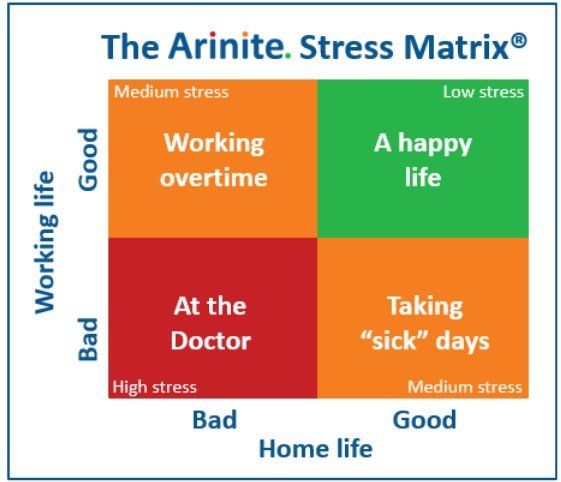
Employers have a duty of care to provide a safe workplace. Encouraging employees to monitor their stress levels can ensure work stressors are manageable and productive:
Time management
One of the most effective ways to reduce stress at work is through realistic time management, setting manageable goals and working to achievable deadlines.
Time to rest
Regular breaks throughout the day can help reduce stress, and restore energy levels. Taking a few minutes for a lunch break or even a brief walk outside can be incredibly beneficial in relieving some of the pressures associated with work.
Good communication
Communicating effectively with colleagues or managers helps build rapport and a supportive team environment. Expressing concerns clearly and openly can make things more manageable in the long run.
Healthy lifestyle
Eating well-balanced meals, social time with loved ones and getting enough sleep are important components when it comes to maintaining a healthy state of mind whilst on the job. Cultivating healthy habits and exercise can help reduce tension built up throughout the working day.
Employer’s responsibilities for dealing with stress
Employers are under a legal duty to continuously assess the risk of workplace stress, and take appropriate action where needed.
Workplace scenarios that can result in stress include:
- Excessive workloads
- Working long hours
- Undertaking too much responsibility
- Job insecurity
- Lack of support from co-workers or management
- Bullying, harassment or team conflict
- Unsafe working conditions
Not only can stress affect an individual or team, but it can impact your business through high absence rates and staff turnover, and low productivity. Stress-related incidents and complaints need to be reviewed seriously and thoroughly.
Conducting a stress at work policy
Since the Health and Safety at Work Act was introduced in 1974, employers have had a legal requirement to ensure the health of employees within their workplace - including taking necessary steps to prevent employees from suffering stress-related illness because of their work.
Successful stress at work policies develop plans, based on the results of the risk assessment process, to improve workplace stressors. This risk assessment should be regularly reviewed by workers and employers to ensure your workplace continues to improve.
Keep your workplace stress-free with Arinite
Our health and safety consultants have years of experience advising employers on the steps to take to improve their workplace’s stress levels.
To conduct your occupational stress audit or if you have any questions, contact the expert team at Arinite today.
Written by
Brendan Tuite
Health & Safety Expert at Arinite