October 2020 Monthly Blog – Workplace signage

I couldn’t help but notice that, when rookie managers start to climb up the learning curve of taking health & safety seriously, some try to manage their H&S responsibilities by plastering the workplace with a barrage of signs ordering: “do this”, “don’t do that”, etc.
One manager insisted on posting signs up the staircases reminding people to hold the handrail. Predictably enough, one wag tripped down the stairs, alleging he had been distracted by reading the sign.
It’s a tricky subject to get right, since the Health & Safety at Work Act expects companies to provide information (sub-text for signs/notices), however you can’t manage by edict alone. Signage is just the cherry on the icing of your training, supervision and management systems.
Less is more
My view here is that “less is more”.
There are certain minimum standards that need to be met - but don’t go blinding staff with a confusing plethora of signs.
Behaviourists will tell you that, when the human brain becomes overloaded, it will switch off and simply stop seeing your messages. Better to stick to the bare minimum necessary.
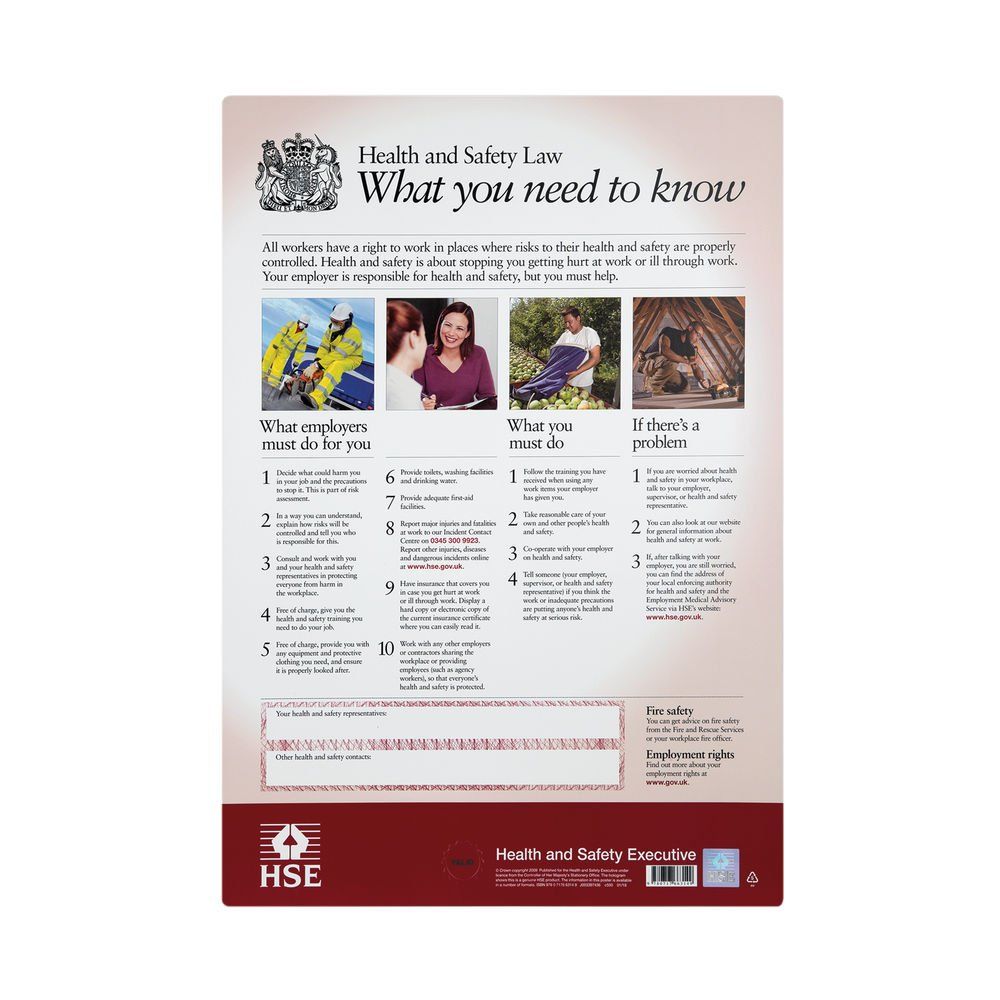
- For starters, you need to display a statutory poster:
- You also need to display a copy of your Employer’s Liability insurance certificate
Insider tip here – Any visiting health & safety professionals will run a casual eye over your poster to make sure that necessary details have been written into the relevant boxes, and that your insurance certificate is up to date. If you don’t get these minor details right, they will wonder what else is missing from your H&S management system.
The bare essentials
Other signs will be necessary, such as pointing the way to fire exits. Place yourself in the position of a stranger to the premises, and ask what signs would be necessary to show the route. You should be able to stand anywhere in the workplace and see the way out.
Further signs may be necessary to tell you where the first aider sits, warn you of hazardous installations like electrical rooms, and instruct what PPE is necessary.
The shape, symbols, and colour of signs is governed by international regulations – as is the size. The further away the signs are viewed from, the larger they must be.
Our qualified consultants can help you implement the right health & safety measures for your business.Limitations
Need Expert H&S Guidance?
What if you want to warn people of a transient danger such as “wet floor” or “men working overhead”?
The bad news is that posting signs does not absolve you from liability.
By putting up this kind of sign, you are simply acknowledging to the world that you have an uncontrolled hazard on your site. Better to try and remove the hazard altogether.
Contact us
If you need help with assessing the suitability of your workplace signage, please do not hesitate in making contact.
Arinite has developed expertise in conducting virtual audits where we may be able to visit your site remotely to assess risks. Please call our office 0207 947 9581, or type an enquiry to:
Written by
Jan Mirkowski
Health & Safety Expert at Arinite