October 2022 International Blog - Mental Health in the Workplace
J
Jan MirkowskiOctober 17, 2022
4 min read

Affecting Everyone
One in three fit notes signed by GPs are for mental health conditions, making it the most common reason GPs sign fit notes – surpassing musculoskeletal disorders. Every couple of years during my youth, I watched a close contact spiral into a nightmare of schizophrenia, paranoia, clinical depression – and several attempts at suicide. Their medicine cabinet always brimmed with pills – sometimes not taken as required. Invariably, that person would end up sectioned in a Victorian-era mental hospital where electroconvulsive shock therapy seemed to be the only thing that “rebooted” (in modern parlance) their brain – unpleasant though the treatment was. They returned from hospital each time with a little of their former persona chipped away – and ultimately forced to take early retirement from work only to die eventually from their mental health conditions. Winding forward to my 21st Century corporate career in telecoms, a subordinate self-certified himself with one day off work due to stress – apparently because one of the kindest, most thoughtful, members of our team had made a (rational) suggestion during a team meeting that seemingly knocked the stuffing out of him. So, we’re clearly dealing with a continuum here – from one extreme to the other. How are employers supposed to manage an illness that can display few outward indications? How do you ensure that the demands you are making on people (or that they make on themselves) are not so onerous as to unbalance their health? Research estimates that 14.3% of deaths worldwide, or approximately 8 million deaths each year, are attributable to mental disorders. The World Health Organisation (WHO) believes that, before the pandemic in 2019, an estimated one in eight people globally were living with a mental disorder – that is close to 1 billion people. Estimates put the rise in both anxiety and depressive disorders at more than 25% during the first year of the pandemic. At the same time, mental health services have been severely disrupted and the treatment gap for mental health conditions has widened.What To Look For
10 things to look out for when it comes to spotting mental health issues at work: · Uncharacteristic behaviour · Low levels of engagement · Decreases in productivity · Changes in sleeping or eating behaviours · Disinterest in work or day-to-day activities · Increased absence · Changes in working patterns · Withdrawal from social situations · Irrational fears, paranoia or anxiety · Substance use/misuse Risk factors that can trigger mental health problems include: · Genetics · Negative life events · Some medications · Illegal drugs · Physical disease/illnesses · Work-related stressWhich Professions are Most Prone to Mental Health Problems?
Free Consultation
Need Expert H&S Guidance?
Our qualified consultants can help you implement the right health & safety measures for your business.
What Should Employers In the UK and Internationally Do?
Arinite publishes a risk matrix addressing work-life balance: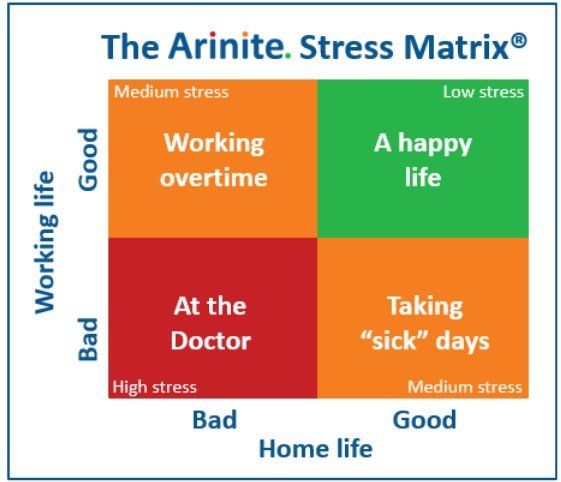
Matrix Example
If you are unhappy at work and have an unhappy home life you are likely to be highly stressed. Other than exercising good listening skills, managers have limited scope to influence employees’ home lives, however they have the ability – and the duty – to recognise and address causes of stress at the workplace. Other than exercising good listening skills, managers have limited scope to influence employees’ home lives, however they have the ability – and the duty – to recognise and address causes of stress at the workplace. Arinite’s Factsheet 0380 – Stress at Work – too detailed to be included here – shows a pathway by which employers can manage work-related stress.Contact Us
Arinite clients appreciate we provide practical, no-nonsense advice about what you need to do to establish and maintain a safe and healthy working environment. Our team of health and safety consultants take pride in keeping health and safety simple. If you need to call upon our expert assistance, or just for an informal chat, please call our office on 0207 947 9581, or contact us here. Jan MirkowskiJ
Written by
Jan Mirkowski
Health & Safety Expert at Arinite